

3d laser scanning and digital object modeling
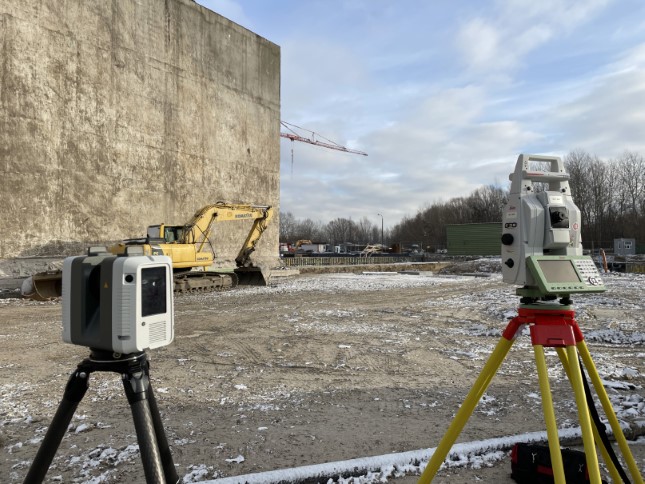
In the era of construction digitalization, 3d laser scanning is becoming a key link in the design and implementation process. Geo company sp. z o.o. utilizes the most advanced stationary and mobile scanners to deliver data with unprecedented detail. Our teams in 9 branches across poland carry out measurements that eliminate human error and reduce field inventory time to a minimum.
3d laser scanning of objects and architectural inventory
We perform 3d laser scanning of objects of any scale – from architectural details in historic tenement houses to large-scale production halls. The result of our work is a “point cloud” – a faithful, three-dimensional image of the measured object. Thanks to scanning, you gain:
-
Data completeness: we record every detail, wire, and structural beam.
-
Non-invasiveness: the measurement takes place without contact with the object, which is crucial for monuments and active production lines.
-
Time savings: what takes a traditional team days, we scan in a few hours.
Advanced 3d modeling and bim standards
The point cloud is just the beginning. We specialize in the 3d modeling process, converting raw scanner data into intelligent cad or revit models. Tworzymy:
-
As-built models: reflecting the actual state of the building after investment completion.
-
2d/3d models for architects: sections, floor plans, and elevations generated directly from the point cloud.
-
Models of machinery and equipment: essential for industrial plant modernizations and clash detection analyses.
Structural inspections using scanning methods
We use laser scanning for structural inspections, allowing for the detection of defects invisible to the naked eye. By comparing the point cloud with the design model (nominal vs as-built), we identify deviations in the order of millimeters. Inspection applications:
-
Verticality and flatness analysis: of walls, columns, and industrial floors.
-
Deformation and deflection studies: of steel, concrete, and bridge structures under load.
-
Technical condition monitoring: recording cracks and changes in the structure of objects over time.